
The Day Nigerian Unemployed Youths Organize Everything Shifts
 admin
adminThe Day Nigerian Unemployed Youths Organize Everything Shifts
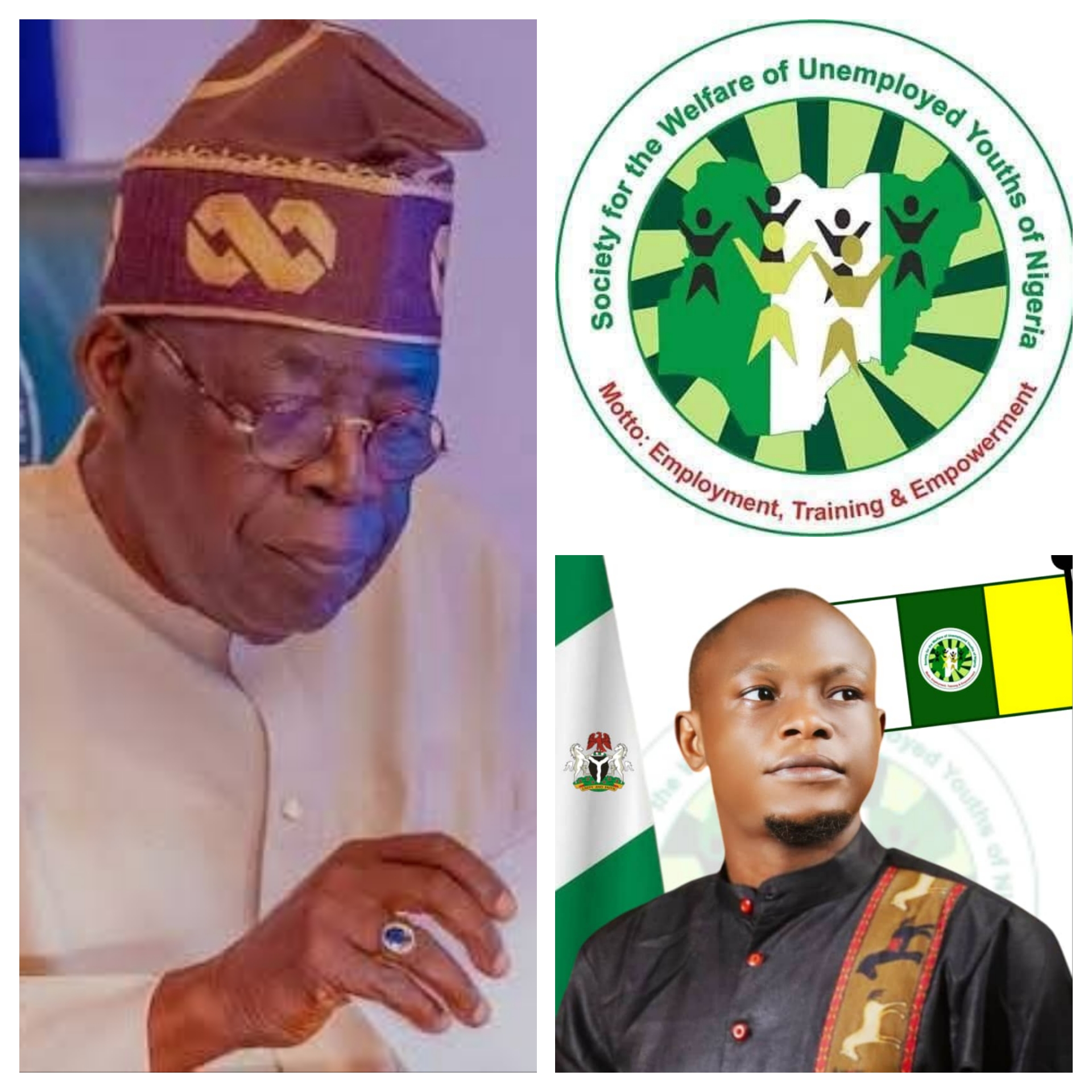
By Comr. Preye V. Tambou, National President, Society for the Welfare of Unemployed Youths of Nigeria (SWUYN)
30th August, 2025
Nigeria sits on a paradox that is as glaring as the midday sun: a nation of immense wealth, blessed with oil, gas, fertile lands, and boundless creativity, yet burdened with mass unemployment and wasted potential. At the very heart of this contradiction lies the story of her youths, brilliant, restless, energetic, yet trapped in a cycle of unemployment, underemployment, and underutilization.
Today, unemployment in Nigeria is more than an economic challenge but a silent emergency. Millions of young men and women roam the streets daily, not because they lack ambition and talent, but because the system has consistently failed to create opportunities. The Nigerian Bureau of Statistics places youth unemployment and underemployment at troubling levels, yet these figures hardly capture the pain of wasted potential, frustration of graduates without jobs, and hopelessness of youths forced into crime, drugs, and desperation.
Hidden in this crisis lies a force too powerful to ignore. Unemployed youths, if organized, represent not just numbers but a movement capable of shifting the entire balance of Nigeria’s social, political, and economic order. No government, elite class, and institution can remain indifferent when millions of determined young Nigerians decide to speak with one voice.
The truth is simple: Nigeria cannot move forward while her youths remain idle. An unorganized, scattered youth population is easy to pacify, but an organized youth force is unstoppable. The unemployed youths of Nigeria are not a burden but an army of innovators, builders, thinkers, and leaders waiting for direction.
The day Nigerian unemployed youths organize, everything will shift. Policies will be challenged. Corruption will tremble. Leaders will be forced to listen and the narrative of a dependent generation will give way to the reality of a decisive, united force.
In Q3 2023, Nigeria’s overall unemployment rate reached 5.0%, while youth unemployment among those aged 15–24 climbed to 8.6%, up from 7.2% in the previous quarter . Although the broader jobless rate has fallen from a record 33% in late 2020, thanks to methodological revisions, the reality behind the numbers remains troubling. Underemployment remains rampant, with 87% of workers self-employed and only 12.7% in formal wage roles . Moreover, in 2023 the youth unemployment rate held firm at 5.84%, exceeding the global average of 16.08% .
These figures may appear moderate, but they mask the deeper crisis: time-related underemployment, NEET (Not in Education, Employment or Training) rates, and informal labor mask the despair and hopelessness permeating millions of young lives .
The Reality Behind the Numbers
In Q1 2024, the overall youth unemployment rate hit 8.4%, translating to 12.68 million unemployed youths, with 14.4% of youth neither in education nor working (NEET) .
Some reports, like one featured in iTelemedia, place the youth jobless population as high as 13.9 million, naming youth unemployment rates at devastating highs of 53.4% among ages 15–24 in Q4 2022, a stark reminder of fluctuating definitions and the depth of despair .
In 2023, about 33% of Nigerians under 30 were unemployed, a demographic tragedy that threatens economic freedom and national stability.
These realities fracture homes, inflame social unrest, and drain our talent, leading to brain drain, poverty, and insecurity yet, they also underscore one unwavering truth: organized youth equals unstoppable force.
The Silent Majority: Unemployed Nigerians Under 45
In Nigeria, the term “youth” officially covers citizens up to the age of 35, yet in reality the struggle extends well beyond this line. A vast majority of Nigerians under 45 years old remain trapped in cycles of unemployment and underemployment. This group represents the country’s most energetic and productive age bracket; those in their prime, expected to be raising families, building businesses, and contributing to the economy instead, they are forced into survival, hustling in informal trades, and considering migration in search of dignity.
According to the National Bureau of Statistics, over 33% of Nigerians under 30 were unemployed in 2023, while millions more in their early 40s were either underemployed and stuck in insecure informal work. The reality is stark: a 25-year-old graduate and a 40-year-old father of three often face the same fate; no stable job, social safety net, and pathway to sustainable income.
This crisis is not just economic; it is generational. When Nigerians under 45 cannot find work, the entire foundation of the nation is weakened. Families remain in poverty, children grow up with limited opportunities, and communities are stripped of the innovators, thinkers, and builders that should be driving development.
This same group, from fresh graduates to mid-career professionals, represents an unparalleled force. If they unite around shared frustration and shared vision, their numbers could shake the very foundations of political complacency. With nearly 70% of Nigeria’s population under 45, this is the majority and when the majority organizes, it becomes not just a voice, but a verdict.
Today, the Nigerian unemployed youth is portrayed as a statistic, problem, and even threat. Politicians reference them during campaigns, only to abandon them afterwards. Policy documents describe them as “time bombs,” ticking away silently at the nation’s foundation but what the ruling class fears and what history confirms is this: the day Nigerian unemployed youths decide to organize, everything will shift.
This is not mere rhetoric. It is the sober truth of power, numbers, and history. Across the world, every great change has been youth-led. From the civil rights movement in America to the Arab Spring, from South Africa’s Soweto uprising to recent global climate movements, young people have always been the engine of transformation. Nigeria is no different. With over 60% of the population below 45, the country’s future does not rest in the hands of its politicians, but in the untapped power of its unemployed youths.
For now, this force lies dormant. Millions graduate yearly, yet jobs are scarce. The informal sector swallows dreams, while many others drift into despair, drugs, cybercrime, and migration. Some are manipulated as political thugs during elections; used and dumped by the same elites who deny them a dignified livelihood, and yet, despite all of this, the collective potential of these unemployed youths remains Nigeria’s greatest unacknowledged treasure.
Imagine for a moment what would happen if the unemployed youths of Nigeria became organized, not in chaos or violence, but in vision, discipline, and unity. Imagine them forming cooperative enterprises to harness agriculture, technology, and local manufacturing. Imagine them standing as one voice, demanding accountability, transparency, and inclusion. Imagine them refusing to be pawns in the political chessboard, instead presenting their own leaders, policies, and blueprint for the Nigeria they deserve.
Nigeria’s Rebirth will not begin from Aso Rock, but from the streets, campuses, and communities where young men and women decide that enough is enough.
The day Nigerian unemployed youths organize, poverty will no longer be a destiny, but a challenge to conquer. Corruption will no longer thrive in silence, because the oppressed majority will finally have a common voice. The manipulation of tribe and religion will lose its grip, because hunger and joblessness know neither tribe nor creed. That day, the true meaning of democracy: government of the people, by the people, for the people will return to life in our land.
The power is already there. It only awaits awakening. The idle graduate in the village, frustrated artisan in the city, disillusioned youth corper, dismissed teacher, and jobless engineer are not failures of society; they are the suppressed engines of Nigeria’s progress. Together, they are more powerful than any cabal, any political dynasty, and any structure of oppression.
So, this is not a call to violence. It is a call to vision. It is a call to organize around purpose, solutions, and dignity. Nigerian unemployed youths do not need pity but platforms. They do not need handouts but opportunities. They do not need empty promises but inclusion in the building of their own nation.
The question is not whether unemployed youths can change Nigeria. The question is when they will realize that they hold the power to do so. For the day they rise above fear, beyond manipulation, and into unity, everything will shift.
Nigeria’s rebirth will not begin from Aso Rock, but from the heartbeat of her people. It will rise from the young man who refuses to sell his vote, the young woman who insists on leadership by merit, and the communities that replace despair with collective action. It will rise from the jobless millions who refuse to be silent any longer.
The future of Nigeria will not be gifted. It will be taken, not by force of arms, but by the organized strength of her unemployed youths and on that day, when millions stand as one, the game will truly be over.

