
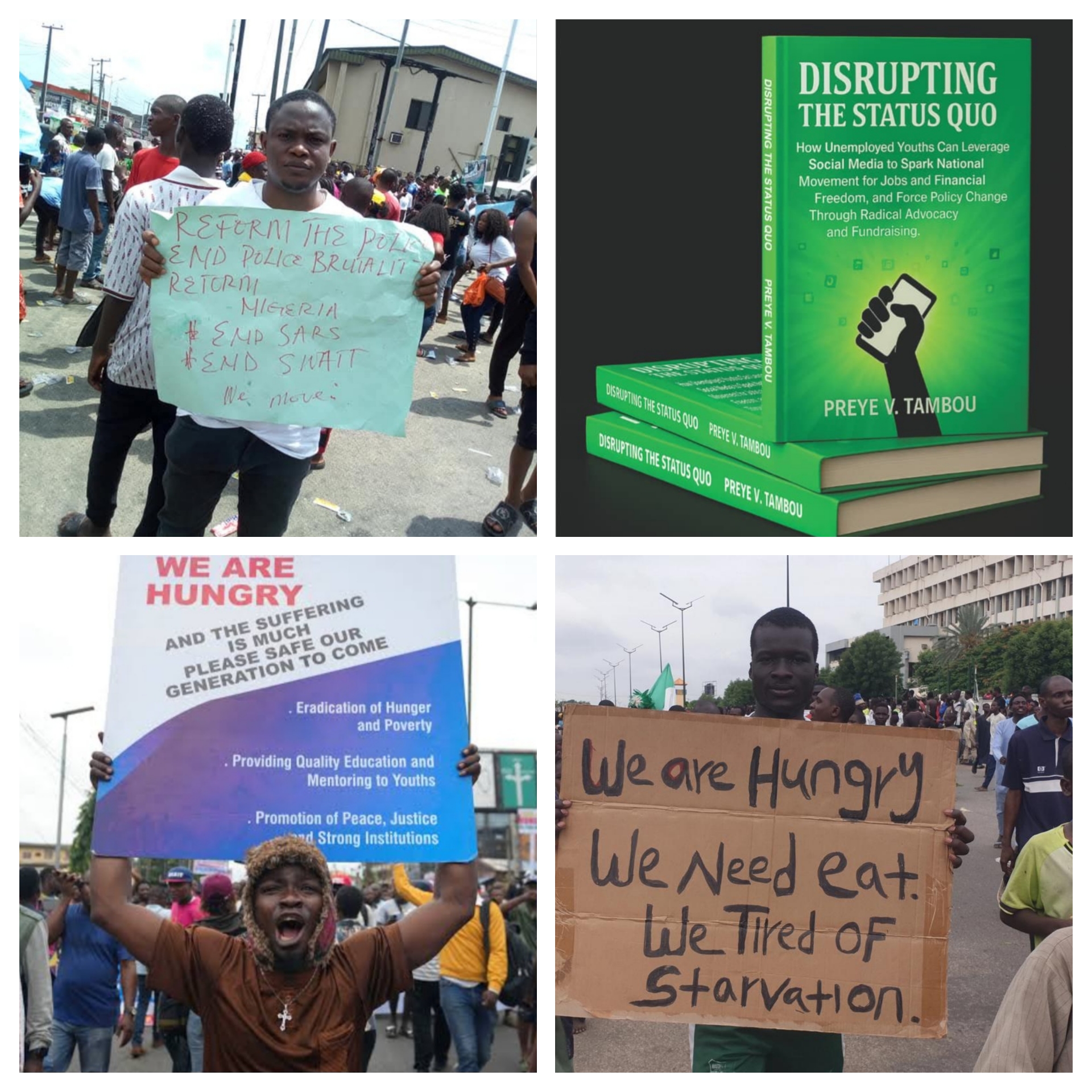
Unemployed Youths: Ban Voices, and They Will Return as Fire
 admin
adminUnemployed Youths: Ban Voices, and They Will Return as Fire
By Comr. Preye V. Tambou, National President, Society for the Welfare of Unemployed Youths of Nigeria (SWUYN)
6th December, 2025
“Power concedes nothing without a demand. It never did and it never will.” ~ Frederick Douglass
Every nation has moments when its youth rise, fists clenched, voices trembling but unbroken, to declare: enough. Nigeria has had many. Each uprising has been met with the same weapon: silence. Sometimes through bullets, sometimes through bribes, often through fatigue yet history shows a paradox – movements crushed on the street are never buried. They live as echoes, waiting for the next eruption.
Nigeria’s unemployed youths are not the first restless generation, and they will not be the last but if they understand the unfinished struggles of the past, they can learn to turn silenced protests into unstoppable revolutions.
The Forgotten Uprisings
# Ali Must Go, 1978.
The streets of Lagos trembled when students rose against the increase in meal tickets from 50 kobo to N1.50. It was not about food but dignity. The government responded with soldiers. Seven students died. The movement was crushed, but its courage still whispers across campuses.
# June 12, 1993.
A stolen election became the rallying cry of a betrayed generation. Youths poured into the streets demanding the mandate of M.K.O. Abiola. What followed was years of military repression, arbitrary arrests, and silence enforced by fear yet June 12 remains a symbol that even stolen dreams cannot be erased.
#OccupyNigeria, 2012.
When fuel subsidy was removed, making transport and food unaffordable, youths and workers filled Ojota Freedom Park. For days, music, chants, and placards turned into a carnival of defiance. Government forces later cleared the streets, but something had shifted: a generation had learned it could paralyze the State.
#EndSARS, 2020.
What began as a hashtag became the loudest youth revolt in Nigeria’s democratic history. Digital natives raised millions in donations, ran medical aid, fed protesters, and livestreamed police brutality for the world to see. The Lekki Toll Gate shootings silenced the crowds, but not the conviction. The movement proved one lesson forever: leaderless, decentralized youth uprisings are possible and powerful.
Global Lessons Written in Fire
History beyond Nigeria confirms the same truth: youth may be silenced, but they are never defeated. Ban voices, and they will return as fire.
# Tunisia, 2010. Mohamed Bouazizi’s self-immolation lit the Arab Spring, proving a single unemployed youth could ignite nations.
# South Africa, 1976. Students of Soweto rose against apartheid education. Hundreds were killed, but the uprising weakened white supremacy’s foundations.
# Hong Kong, 2019. Armed with umbrellas and encrypted apps, youths paralyzed one of the world’s financial hubs. Their protest did not immediately win, but it reshaped global imagination of digital resistance.
# Nepal, 2025. A government ban on more than two dozen social media platforms backfired spectacularly. What began as peaceful demonstrations against digital censorship escalated into the Gen Z Protests, the largest uprising in Nepal’s recent history. At least 19 people were allegedly killed when security forces opened fire, but instead of retreating, youths stormed parliament, torched government property, and chased corrupt officials into rivers and helicopters. Within days, Prime Minister Sharma Oli resigned. What began as a fight for digital freedom became a revolution for justice, transparency, and democracy itself.
The Anatomy of Suppression
Why do youth uprisings fade? Three weapons are consistently used:
1. Repression. Teargas, bullets, prisons. Governments believe blood buys silence.
2. Co-optation. Committees, grants, “dialogues” that offer photo-ops but no change.
3. Exhaustion. Hunger, joblessness, and despair slowly draining energy until movements dissolve.
Each weapon carries a weakness: repression creates martyrs, co-optation breeds cynicism, exhaustion fertilizes anger for the next revolt.
No government has ever permanently silenced its youth; it only delays the eruption.
Vignette: The Girl With the Placard
At Ojota, 2012, a young woman named Zainab stood barefoot, holding a placard taller than herself: “We are not lazy, we are hungry!” She was 19, a polytechnic student, her school fees unpaid. Soldiers mocked her, “Go back home” but she stood until tear gas blurred her sight.
A journalist captured her photo. Years later, that image still circulates online, her face now an emblem of defiance. She did not stop subsidy removal but she became proof that even silenced voices echo across decades.
Why They Rise Again
Generations may forget dates, but they never forget wounds. The Nigerian youth who tweets today about unemployment is carrying the same rage as the student who shouted “Ali Must Go!” in 1978. The unemployed graduate selling recharge cards and doing POS is linked by pain to the jobless Tunisian vendor who set himself ablaze in 2010. The protesters who chant “#NepalRevolution” in Kathmandu are speaking the same language as those who shouted “End SARS!” in Lagos.
Suppression buries bodies, not memories.
The Blueprint of Resilient Movements
Every uprising leaves behind lessons written in blood and courage. To avoid repeating the cycle of rise and silence, Nigerian youths must learn to:
# Document. Archive stories, data, and images so the State cannot erase memory.
# Decentralize. Movements with no single leader cannot be easily bought or jailed.
# Digitize. Use social media as permanent megaphone and historical library.
# Diversify. Link unemployment to education, healthcare, security, and dignity, so the struggle cannot be trivialized.
# Globalize. International solidarity protects local movements from isolation.
Movements fail when they forget. They win when they evolve.
From Silence to Seeds
The silence after each crushed protest is deceptive. It is not the silence of death, but germination. Seeds lie in soil unseen, waiting for rain.
Nigeria’s youth struggles have always been interrupted, never completed. Ali Must Go did not die but became OccupyNigeria. OccupyNigeria did not end but became #EndSARS and #EndSARS is not finished but waits for its next form, sharper, more organized, more relentless.
Silenced but not defeated. That is the story of Nigerian youths. From campus cafeterias to toll gates, from placards to hashtags, each generation has risen, been beaten, and risen again. The unemployed youth of today are heirs of that unfinished rebellion.
History whispers to them: Do not mourn the silenced, become their voice. Do not fear defeat, Fear silence.
A generation that refuses to be silenced will one day write not just protest songs, but new policies, laws, and future.
When that day comes, the youth of Nigeria will not be remembered as victims. They will be remembered as the disruptors who forced the nation to listen.

