
The Status Quo: How Power Sustains Poverty and Unemployment
 admin
adminThe Status Quo: How Power Sustains Poverty and Unemployment
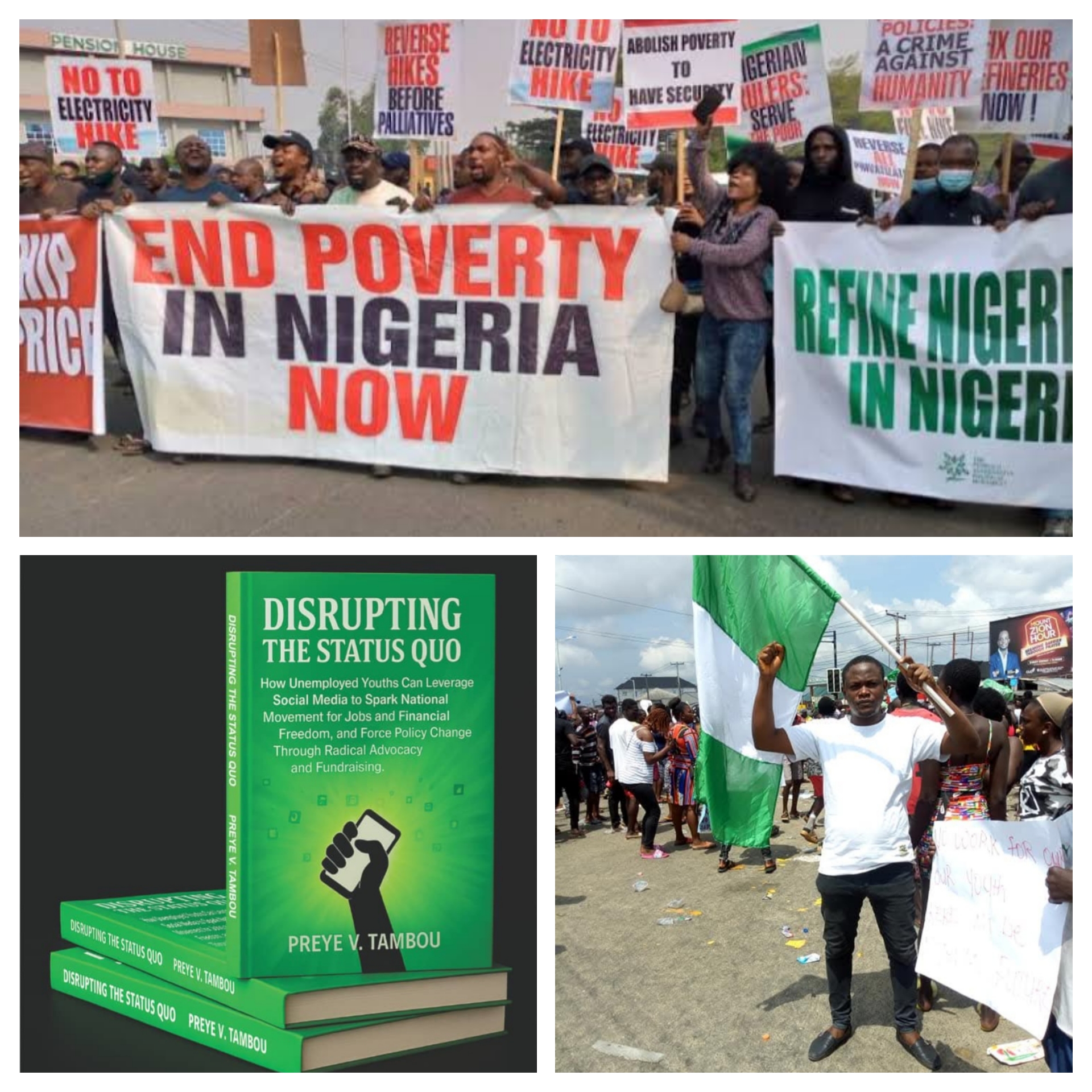
By Comr. Preye V. Tambou, National President, Society for the Welfare of Unemployed Youths of Nigeria (SWUYN)
8th December, 2025
“Poverty is not an accident. Like slavery and apartheid, it is man-made and can be removed by the actions of human beings.” ~ Nelson Mandela
Nigeria’s unemployment crisis is not a mistake. It is not the product of bad luck, nor merely poor planning. It is design. Poverty has been weaponized into a political tool, and mechanism of control by the elite.
The status quo thrives when the majority are too hungry to question, too jobless to organize, and too exhausted to resist. For decades, leaders have perfected this machinery: wealth concentrated at the top, promises recycled at election time, and youths pacified with crumbs called “empowerment schemes.”
This is not governance. It is hostage-taking
Power protects poverty by disguising it as fate, but poverty survives only because someone benefits from it and the day citizens see this truth and demand better, the entire status quo collapses, never to rise again.
How Power Feeds on Poverty
1. Dependency Politics. Hunger makes citizens vulnerable. A bag of rice, N5,000 handout, or a “youth empowerment programme” becomes currency for votes. Politicians need unemployment because they cannot buy loyalty from independent, financially free citizens.
2. Deliberate Decay of Institutions. Public schools collapse while private schools flourish for the elite. Hospitals rot while leaders fly abroad for checkups. Industries remain stunted while import cartels profit. The system is not broken; it is working for those it was built to serve.
3. Crony Capitalism. Contracts are not awarded to the most skilled but to the most connected. Innovation dies in a swamp of nepotism, leaving young entrepreneurs stranded while political loyalists grow rich.
4. Weaponized Insecurity. Idle youths are easy recruits for political thuggery, cultism, militancy, and terrorism. Politicians do not fear unemployment, they weaponize it every election season.
Poverty in Nigeria is not a problem for the powerful, it is their project.
Vignette: The Two Weddings
On a Saturday in Abuja, two weddings unfold. In one hall, lit with chandeliers, a minister’s daughter marries. Guests arrive in convoys of luxury SUVs, the hall decorated with imported roses. Plates overflow, champagne flows, foreign artists perform. Millions are spent in hours.
Across town, in a small church, another wedding takes place. A young mechanic, Ademola, weds his longtime partner. The bride wears a borrowed gown, guests eat rice served on plastic plates. The couple counts cash gifts carefully, hoping it will cover next month’s rent.
These are not just two weddings. They are two Nigerias, coexisting in fragile tension, one bloated by excess, the other suffocated by scarcity. The elites flaunt wealth to normalize inequality, while the majority are taught to accept poverty as destiny.
The Politics of Distraction
Every four years, politicians reinvent the same script. Roads are patched, schools painted, and markets visited. The hungry applaud, forgetting decades of neglect. Campaign jingles drown out questions about jobs, healthcare, or accountability.
Religion and ethnicity are deployed as smoke screens. Citizens are told to vote for “our brother” or “our faith” rather than leaders of competence. Meanwhile, the jobless graduate in Delta State and the jobless farmer in Katsina State face the same poverty, but are divided by politicians who profit from their disunity.
Divide the poor, distract them with identity, and you can rule them forever.
A Nation of Spectacle, Not Substance
The Nigerian State survives on performance, not transformation. Ribbon-cutting ceremonies for projects that never function. Youth empowerment programmes that train 50 people in a nation of over 50 million unemployed. Poverty-alleviation schemes where the only poverty alleviated is that of the organizers.
Billions vanish into “capacity building” seminars, while youths hawk recharge cards and pure water on the streets. Anti-corruption agencies raid offices, but their biggest targets are opposition figures, yahoo boys and petty thieves never the notorious ruling class. It is not governance, it is theatre.
The Psychological Trap
The greatest weapon of the status quo is not bullets but belief. For decades, poverty has been baptized as patience. Citizens are told to “wait for God’s time,” as if unemployment were divine punishment instead of political negligence.
The youth are told: “Respect your elders,” even when those elders have looted their future. They are told: “Be patient,” even when leaders are not patient in looting.
The most dangerous prison is not built of walls but beliefs.
The Global Mirror
Nigeria is not alone. Across the world, elites have learned to sustain poverty as power:
# India. Farmers kept indebted while politicians grow fat on contracts.
# Latin America. Favela youths turned into cartel soldiers while elites dine in gated communities.
# Middle East. Oil wealth hoarded by monarchs while jobless youths migrate or revolt.
The pattern is universal: where power is not accountable, poverty is manufactured.
Vignette: The Silent Classroom
In a government primary school in Kano, 87 pupils squeeze into a classroom built for 40. The roof leaks when it rains. The teacher, underpaid and overwhelmed, writes on a broken chalkboard. A boy named Musa sits in the corner, silent. He has not eaten breakfast.
By noon, his stomach growls louder than the teacher’s voice. He drops his head on the desk, not because he is lazy, but because hunger is louder than arithmetic. Musa’s story is repeated in thousands of classrooms across Nigeria yet tomorrow one of Musa’s classmates may be hired to wave a party flag for N1,000 at a rally. Hunger has reduced education to survival. Poverty sustains the politics of control.
The Cost of Silence
The elites believe the status quo is permanent but history is unkind to such illusions. France’s aristocracy believed peasants would bow forever until the guillotine rose. Apartheid South Africa believed black youths would remain docile until Soweto exploded. Tunisia’s rulers thought censorship would silence anger until a fruit seller lit himself on fire.
The same logic sustains Nigeria’s rulers today. They gamble that hunger will silence youths but hunger has a breaking point.
A system built on poverty is a house built on gunpowder.
At the Breaking Point
The status quo can sustain poverty for a time, but not forever. Every Deji hawking water in Lagos traffic, every Chuks coding fraud in Enugu, every Zainab holding a placard in Ojota, every Musa hungry in Kano are not isolated stories. They are pressure points. They are sparks.
The ruling class is sitting on a volcano disguised as silence and when that volcano erupts, no convoy, palace, or private jet will be far enough to escape.
Poverty in Nigeria is not an accident. It is architecture. It is the scaffolding that holds the status quo in place but architecture can collapse, and when a generation rises with enough hunger, anger, and digital firepower, no scaffolding will stand.
The youth must see poverty not as shame but as strategy designed to chain them and once they see the chains, they can break them because history is clear: the status quo always looks permanent, until the day it shatters.

